
The temperate rainforest.

Where are temperate rainforests found?
Temperate rainforests are mainly found in cool temperate climate zones between 40° and 60° latitude in both the Northern and Southern Hemispheres. Some of the best-known regions include the west coast of North America, from northern California to Alaska, the southern coastal regions of Chile, parts of New Zealand and Tasmania, and some areas of Japan and Europe.
The climate of the temperate rainforest
Temperate conditions between 10 and 20 °C
- Canada's west coast and its high mountain ranges
- a humid climate all year round
- annual rainfall of 5000 mm
- Frequent fog; mild summers and winters
- Giant trees: up to 100 m tall and 2000 years old
- Sea breezes
- Moist air masses rise
- Pacific Ocean
The interactive view is currently unavailable. You can read all the information below.
What is the temperate rainforest?
Why was it created?
Important – and under threat
The old-growth forests of the temperate rainforest are the most species-rich ecosystem in the temperate climate zone and are therefore a vital habitat. They also store vast quantities of carbon and thus play a significant role in the global climate system.
Unfortunately, however, it is precisely these old-growth forests that are under acute threat from clear-cutting and urbanisation. That is why Wilderness International is active in the temperate rainforest. Here, you can join us in preserving a piece of Canadian old-growth forest for ever:
What makes him so special?
1. Huge, ancient trees

How can trees grow so tall and live for so long?
Mild climate
: The Pacific Ocean, with its vast masses of water, acts as a heat reservoir. Particularly during the winter months, a great deal of thermal energy is released by the water, resulting in exceptionally mild and short winters. Due to this balanced climate, the growing season lasts unusually long, and frost is rare. As a result, plant parts that die off and fall to the ground are converted into new nutrients throughout the year via biochemical decomposition processes.
Lichens
Epiphytes such as mosses and ferns thrive in the tree canopy. Thanks to the good air quality and high humidity, temperate primary rainforests are also home to many lichens, such as beard, crust and lung lichens. Lichens are a symbiotic relationship between a fungus and an alga. The fungus forms the body, whilst the alga carries out photosynthesis. Storms blow the lichens down, and they fall onto the forest floor, where they release their nutrients.
Ample water
Furthermore, the Pacific winds carry an enormous amount of water into the forest, which in turn can be stored in the thick layer of moss and in the forest floor. Thanks to this optimal supply of nutrients and water, countless other plants – such as lichens, mosses and even fungi – grow alongside the trees, before eventually dying off. This creates a continuous cycle in which every species plays its part in maintaining an intact ecosystem.
I would like to continue receiving information about the temperate rainforest.
Subscribe to the newsletterThe Tree as a Habitat
Western redcedar
- up to 2,000 years old
- up to 100 m tall
- 6,400 m³ of habitat
- Protect 64 m² of forest
Tap a point on the tree or open an entry in the list.
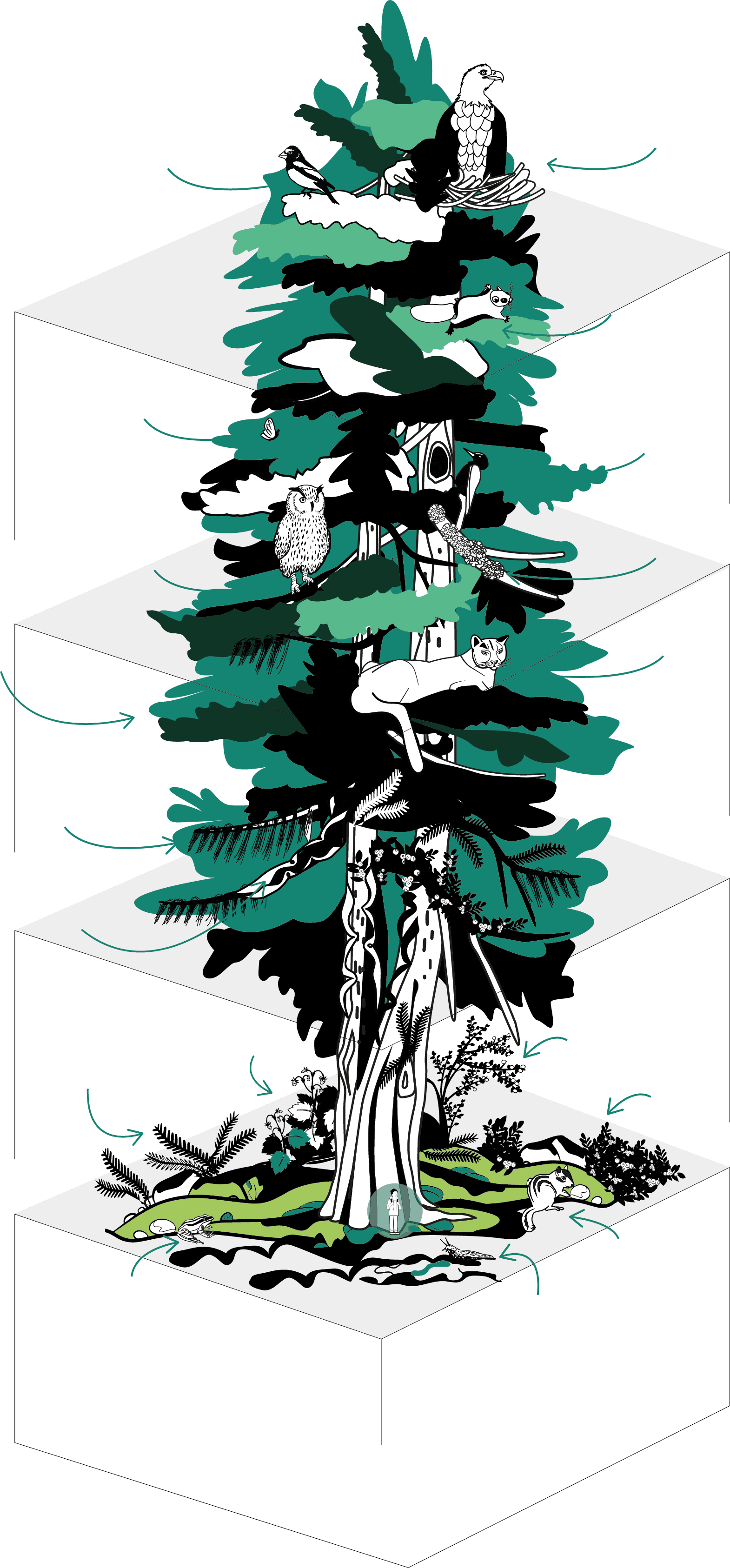
The illustration could not be loaded. All information is available in the list.
Who lives on the tree?
Eagle's nest
The bald eagle not only lands on the tallest trees, it also builds the heaviest nests of any bird species. Often described as a master builder, it returns to the same home year after year. Its nests can eventually weigh up to a tonne.
Northern flying squirrel
High in the trees, the flying squirrel gathers nuts, lichens, berries and mushrooms, but it also eats tree bark.
Tent caterpillar moth
This is a night-flying moth. The female lays up to 300 eggs on a branch. The caterpillars that hatch spin a tent-like nest, from which they set out together to find food.
Huckleberry
A valuable food source for people and animals, and also a traditional medicine for First Nations along the Pacific coast.
Pacific treefrog
Like most amphibians, frogs are excellent at clinging and climbing. Adhesive forces from their moist belly skin and the undersides of their limbs help them cling to tree bark.
Licorice fern
Compared with a 6% sucrose solution, licorice fern is around 600 times sweeter, with a licorice-like aftertaste.
Beard lichens
In the moist, clean air, these tree beards grow longer and longer over the decades. They give the trees their enchanting green cloak.
Cougar
A cougar, also known as a mountain lion, is agile and powerful. It can leap up to 5.5 m from the ground into a tree. It hides high above: you only see it when it wants to be seen.
Leafy lichens
Lichens are combinations of a fungal species and an algal species. Neither the fungus nor the alga can survive alone; in the lichen they form an inseparable partnership and become a new, distinct species. Colonies of bacteria also live on the lichen, binding nitrogen from the air, which the fungus within the lichen also absorbs.
Like its larger relative, beard lichen, leafy lichen binds carbon. When lichens growing on trees become too large and heavy, they fall to the forest floor and decompose. This releases nutrients that, in turn, help the tree grow.
Woodpecker cavity
Woodpeckers excavate nesting cavities to lay their eggs and raise their young. After the woodpeckers leave, many other animals continue to use these cavities as nesting sites or hiding places.
Small animals and insects
Countless animal species make their home in the temperate rainforest. Salamanders, frogs and snails enjoy the thick, damp cushions of moss; butterflies and beetles find food in flowers, leaves, fruit and decaying wood. Together they are an important part of the ecosystem's continuous exchange, powered by solar energy.
Blueberry shrubs
The delicious Alaska blueberry is rich in antioxidants. It is not only the largest of its kind, but also has effects against cancer.
Great horned owl
The great horned owl is one of the largest owls in the temperate rainforest. To nest, it seeks out abandoned nests of other birds or uses tree cavities. When it is not hunting mice, it prefers the dense, shady canopy.
Chipmunk
Townsend's chipmunk can grow up to 31 cm long, making it a particularly large chipmunk. It likes to bask in the sun on trees. Unlike our squirrels, however, it lives in an underground burrow.
Moss mats
Moss mats grow very slowly and show that a tree is already very old. They provide a habitat for many tiny organisms and plants, such as licorice fern. The temperate rainforest has over 600 moss species, which First Nations use, among other things, for wound care to stop bleeding and as cushions.
Leopard slug
Reaching an impressive 20 cm in length, this predator likes to feed on other slugs and their eggs.
Evening grosbeak
The evening grosbeak is a songbird in the finch family. Evening grosbeaks usually travel in flocks, calling constantly to stay in contact with one another. When maple seeds ripen, they provide a reliable harvest.
Salmonberry
The edible fruit tastes wonderfully of cinnamon and raspberries. In addition to using it as food, First Nations of the Pacific coast use it as a remedy for coughs, diarrhoea and labour pains.
The Long Journey of the Salmon
The animation could not load. You can read about the cycle here.
The salmon cycle
-
Born in the rainforest
Salmon are born in old-growth forest streams and rivers.
-
From river to ocean
They migrate to the sea and live there for two years. They are an important food source for orcas.
-
Returning to spawn
In autumn, the salmon return to their birthplace to spawn.
-
Food for wildlife
Eagles, coastal wolves and grizzly bears eat the salmon. Grizzlies build up fat reserves for winter dormancy. The fish remains left behind decompose.
-
Nutrients for the forest
Salmon carry nitrogen from the ocean into the forest, enabling trees to grow to enormous sizes. In turn, the forest protects the streams where salmon are born.
This is how the cycle works
Salmon are born
in primeval forest streams. One-fifth of the world’s salmon stocks originate in the streams and rivers of the temperate rainforest region of western Canada!
This is where one of the most important cycles that sustains the west coast begins and ends. For it is here that the salmon are born, and from here they migrate to the sea.
The rainforest plays a vital role in keeping the salmon’s natal streams healthy and cool. The roots hold the banks together, the trees shade the water, and their wood, leaves and needles provide essential nutrients.
The salmon migrate to the sea and serve as food for orcas
. In the sea, salmon are a vital food source. Orcas, for example, rely on salmon as their main source of food. This is particularly true of king salmon, which are especially sensitive to changes in the ecosystem of their natal streams.
The salmon migrate back to their natal streams and provide food for mammals and birds
. After two years in the ocean, millions of salmon leave the sea to embark on the arduous journey back upstream. This is because they want to spawn in the very same place where they were born. Upstream, grizzly bears are already waiting to catch the fish from the water, as they rely on the fat reserves to get them through hibernation. Coastal wolves, ravens and eagles also love the nutritious salmon. Sometimes they carry the fish into the forest to eat them in peace. And because food is in abundance, the bears, wolves and eagles usually select only the finest parts of the fish, leaving plenty of scraps behind.
Important nutrients for trees
The leftover salmon remains decompose, breaking down into their chemical components in the process. The soil is thus enriched with important nutrients – above all nitrogen – year after year by these animals. Scientists have even found nitrogen compounds of marine origin in the very highest tree canopies.
A delicate cycle
If even a single ‘salmon run’ is prevented by deforestation and the resulting siltation and rise in river temperatures, or disrupted by the fishing industry, the natural cycle is severely disrupted. This directly affects the predators of the salmon – namely bears, wolves, eagles and orcas. Without the salmon, they do not have enough food. And if they no longer drag salmon into the forest, important nutrients for plant growth are lacking there. The forest and its rivers, in turn, are the habitat for the salmon and their predators. Clear-cutting thus disrupts the entire cycle.
2. Biodiversity
Why is there such a high level of biodiversity?
The exact causes of the extraordinarily high biodiversity in temperate rainforests are still the subject of scientific research.
However, factors such as undisturbed development over millions of years, year-round sunlight, high rainfall, mild climatic conditions and an optimal supply of nutrients appear to play an important role.
All this has led to a complex vegetation structure and a multitude of ecological niches. A wide range of animals have specialised within the forest’s various strata, giving rise to complex food webs and interactions. Undisturbed by human influence, this has ultimately led to ever-increasing biodiversity over the course of Earth’s history.
A cycle spanning centuries
The wolf den and the tree
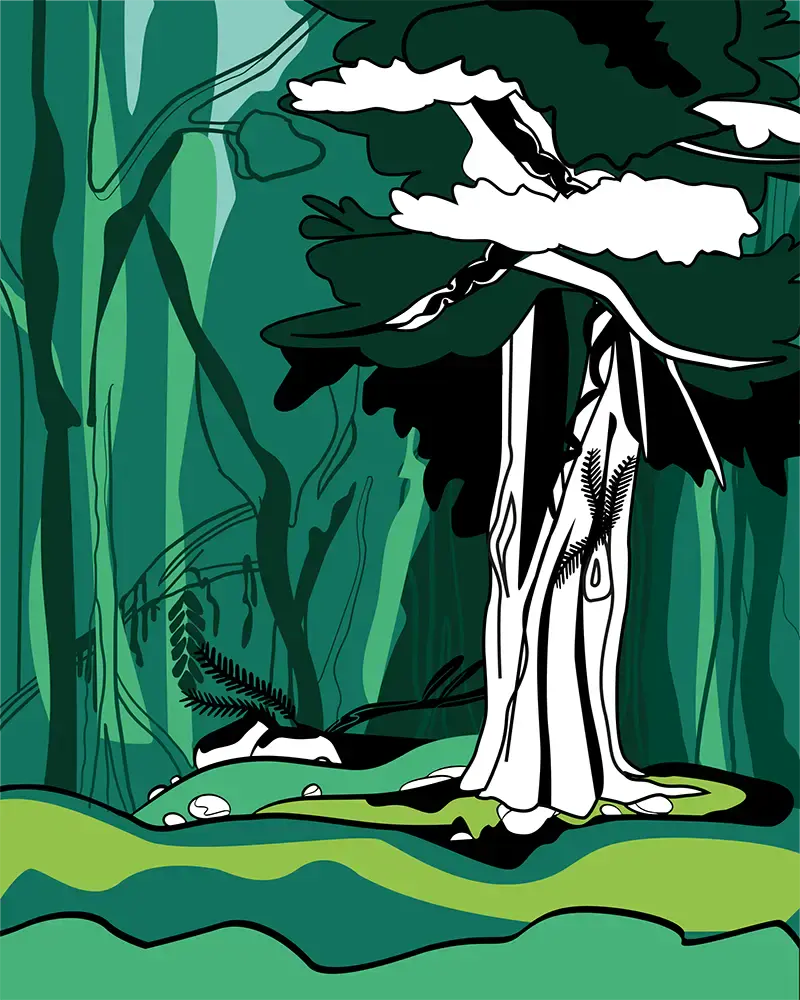
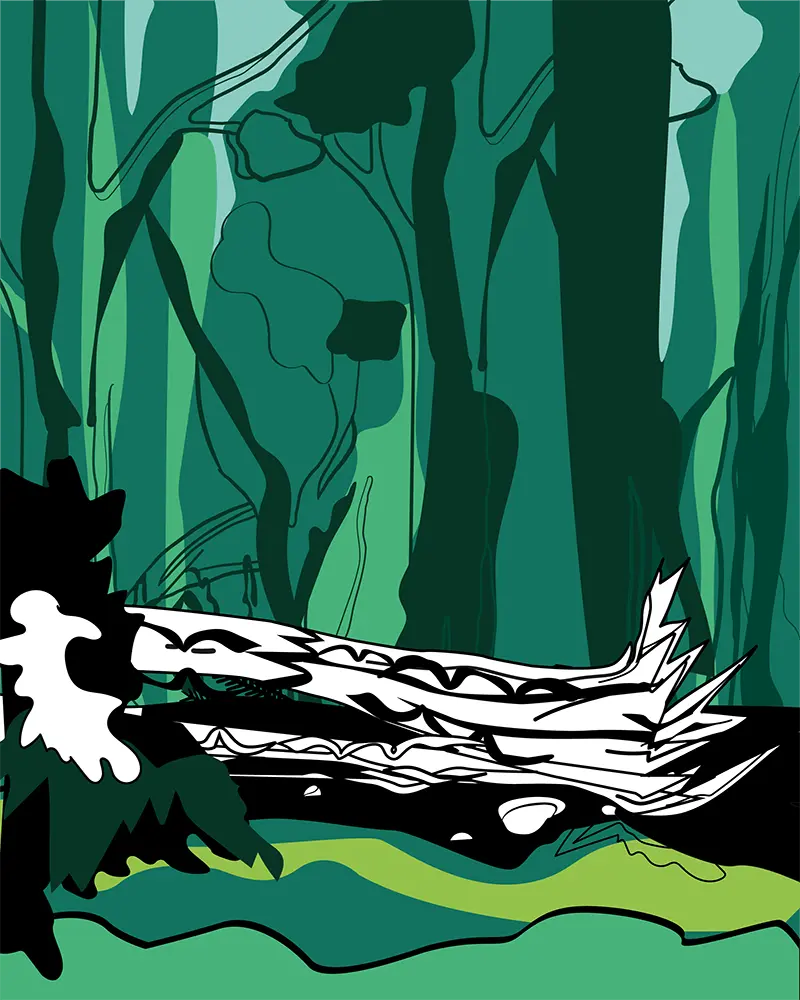
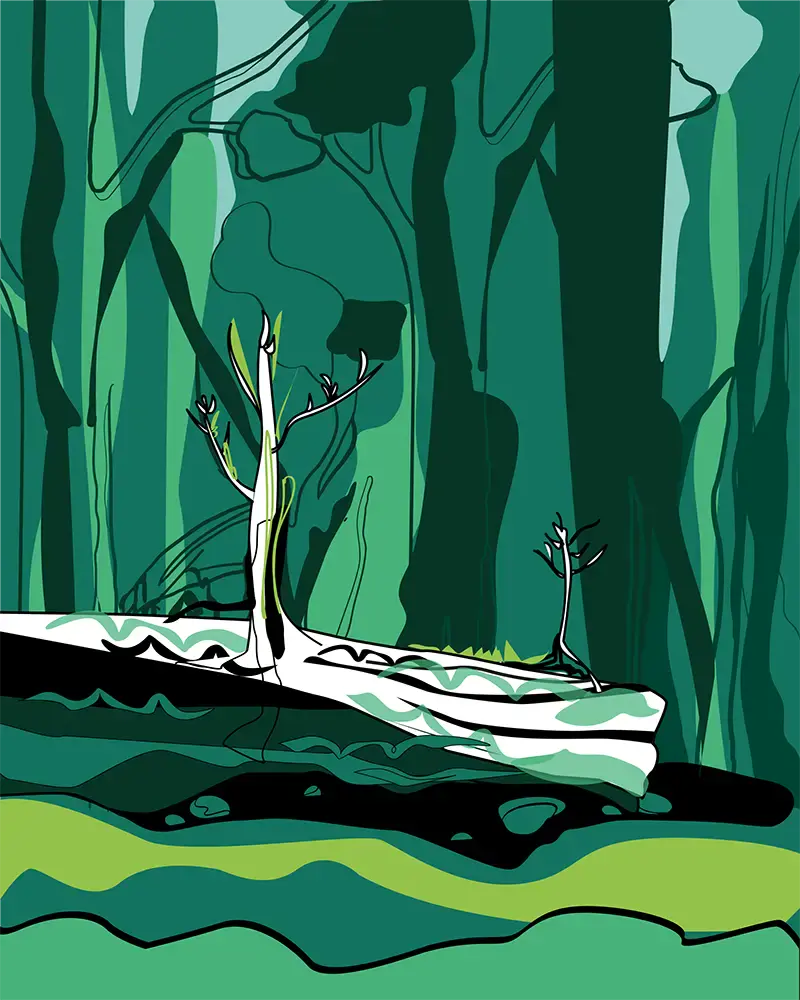
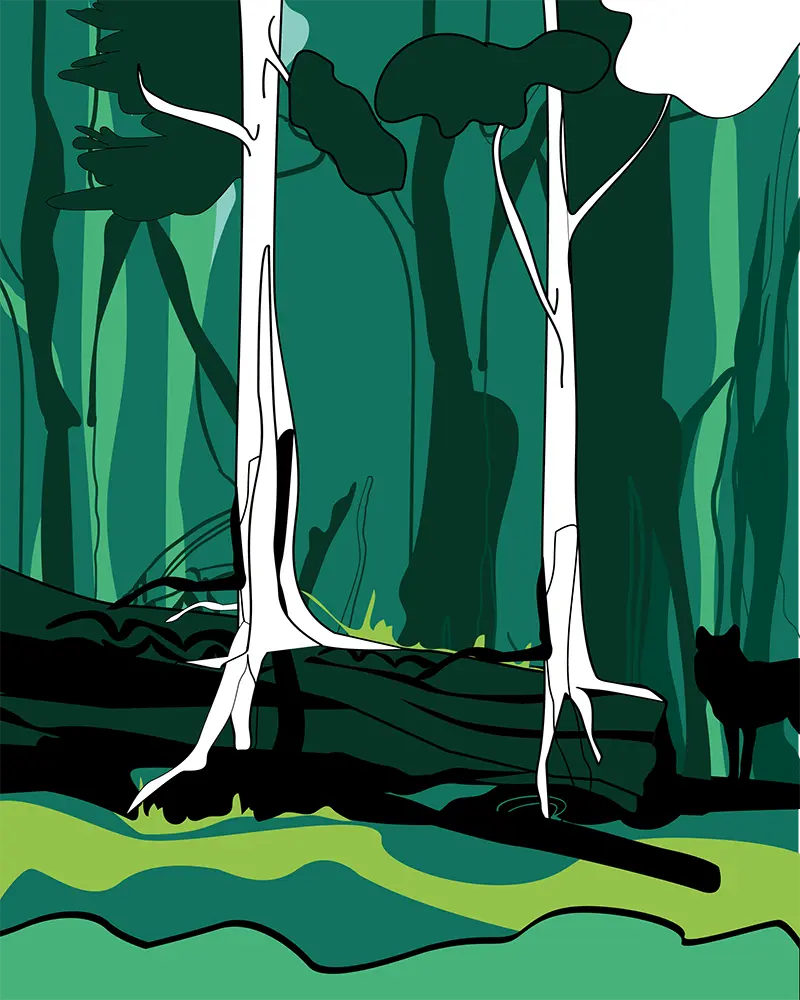
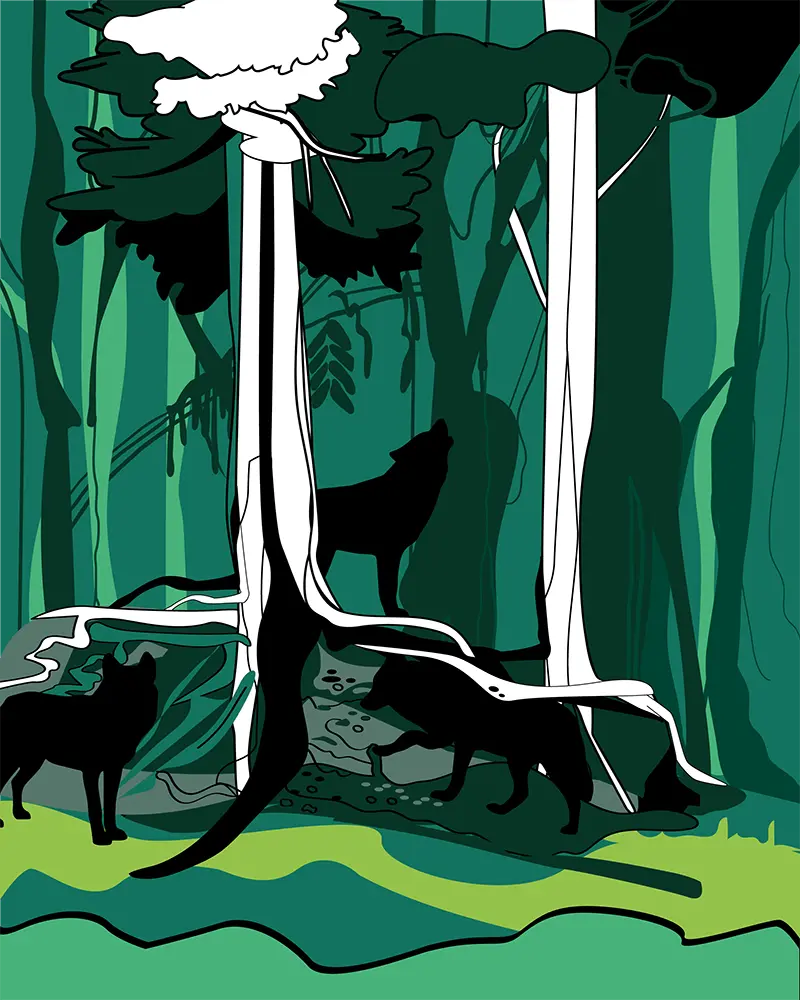
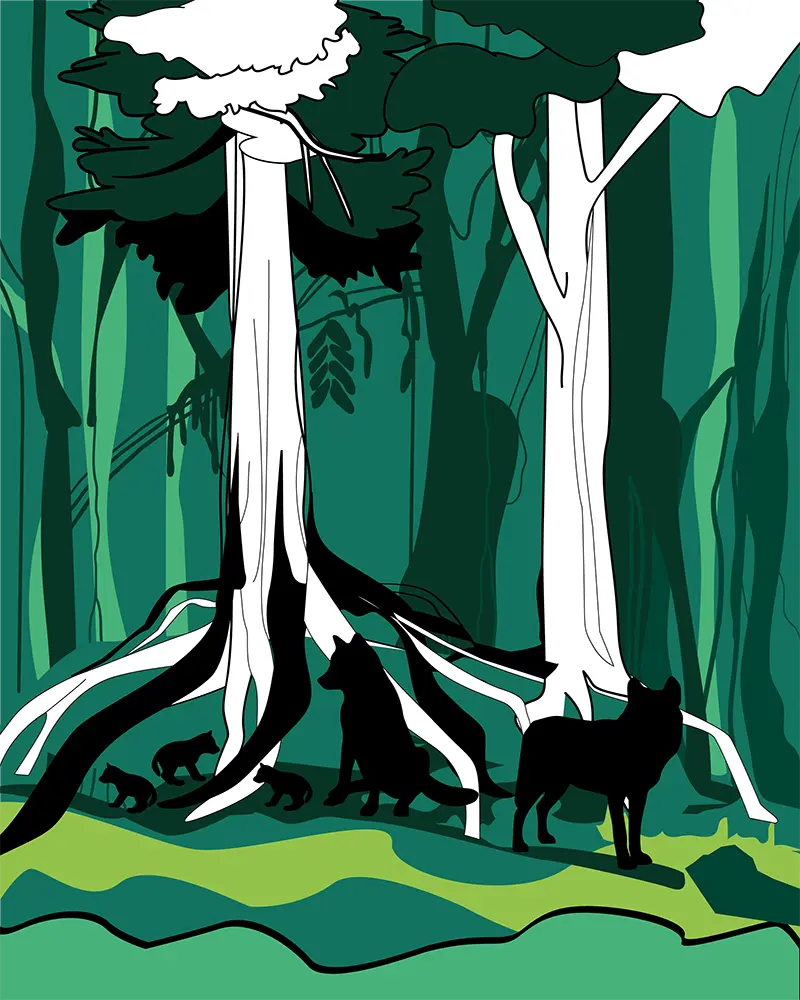 The illustration could not be loaded. You can still read the story here.
-
The illustration could not be loaded. You can still read the story here.
01/06
Why do trees die?
The trees in our protected areas can live for over a thousand years! But even they cannot live forever. After many centuries, they sometimes find it harder to defend themselves against diseases, pests and storms. They also struggle to respond to environmental changes and competition from younger trees.
-
The illustration could not be loaded. You can still read the story here.
02/06
An old forest giant falls
When the tree is no longer strong enough, it falls. A storm or a lightning strike may bring it down, or a bark beetle may have disrupted the flow of nutrients.
-
The illustration could not be loaded. You can still read the story here.
03/06
Deadwood or a nurse log?
The fallen tree now lies on the forest floor as deadwood. Yet it is full of life! It is especially important for biodiversity, providing habitat and food for insects and birds. As fungi and bacteria break it down, they also release important nutrients. This makes the nurse log an ideal place for new seedlings to grow.
-
The illustration could not be loaded. You can still read the story here.
04/06
The next generation
From its raised position, nourished by the old tree, the young tree grows to great heights over the next hundred years. Its roots completely surround the nurse log. Between them, the old trunk gradually becomes light, loose soil again.
-
The illustration could not be loaded. You can still read the story here.
05/06
The wolves arrive
Female wolves look for a den in which to give birth. It is almost always beneath the roots of mighty, centuries-old trees. The loose soil between the new tree’s roots allows the mother wolf to dig a den. Sheltered by the old tree, she can give birth and raise her pups there.
-
The illustration could not be loaded. You can still read the story here.
06/06
A nursery for wolf pups
This process only takes place in forests left undisturbed for centuries. Wolves therefore depend on old-growth forests for their nurseries and the future of their species. Their dens lie within the pack’s territory, often in an elevated spot with a good view and easy access to water and prey.
Protect forest now
More fascinating species
-

Bears
There is still a healthy population of grizzly bears in the West Coast rainforest. When food is plentiful, a mother gives birth to 3–4 cubs in a year. They feed mainly on the vegetation found in the extensive river estuaries and, in autumn, on salmon. During hibernation, the root cavities of old trees are a favourite resting place. -

Bald Eagle
The king of the skies can have a wingspan of up to 3 metres. Bald eagles and countless waterbirds also look forward to the bears’ ‘salmon leftovers’ in autumn. -
Coastal wolves
Canada’s coastal wolves are skilled salmon hunters – a skill they share with grizzly bears. They hunt in symbiosis with ravens, yet remain surprisingly shy. Spotting one is a real stroke of luck. -

Trees
Canada’s rainforest thrives on diversity: Sitka spruce, giant thuja, yew and hemlock form a complex ecosystem. The Douglas fir dominates – growing up to 100 m tall and living for 700 years. However, its valuable timber leads to monocultures, which are felled after 25–70 years. This cycle destroys natural mixed stands and their biodiversity.
We must start to stop.

Why WI protects forests in Canada
-
Are there still any old-growth forests left?
70 per cent of Canada consists of large natural areas. 34 per cent of the country is covered by forest, 53 per cent of which is old-growth forest. In total, Canada is home to 20 per cent of the world’s remaining wilderness areas. -
Are the existing habitats important for the conservation of biodiversity?
The temperate rainforest is considered the most species-rich ecosystem in the temperate climate zone. Its old-growth forests are home to a unique diversity of species and giant trees that are thousands of years old. Rare ghost flowers are found here, as well as bears, wolves and eagles. -
Is the ecosystem important for a healthy climate?
The forests in our protected areas are true masters of CO2 storage and one of the most important ‘sinks’ in the Earth’s carbon cycle. They also play a vital role in cooling and purifying the air, as well as acting as water reservoirs. -
Property law: Can we purchase land in a legally secure manner and protect it in the long term?
Canada is a country governed by the rule of law, with strict regulations governing property rights. This makes arbitrary expropriation impossible. Any damage caused results in severe penalties. The British Columbia Trespass Act explicitly prohibits trespassing on private
land. Violations are prosecuted in court.
A forest protected by you
From a global perspective, old-growth forests are our most important buffer against man-made climate change. Protecting them is a top priority if we are to save the climate.

About Wilderness International
We purchase wilderness areas and protect them for the future – with legal certainty and on a long-term basis through registration in the land register.
These purchases are funded by donations, which not only ensure the long-term protection of the areas but also enable environmental education projects and research into CO2 storage and biodiversity.
As a donor, you will receive a personalised certificate featuring an aerial photograph and the geographical coordinates of your protected woodland – so you can clearly see the impact of your contribution.

Frequently Asked Questions
-
Why is it better to protect existing forests than to plant new trees?
Global warming is a pressing issue, and swift and effective action is needed to halt it. With only a limited budget available, we must carefully weigh up which option is best for ensuring a healthy climate through trees.
For example, if €100,000 is invested in protecting existing forests, our model shows that 100,000m2 of virgin forest will be protected with immediate effect and thus saved from deforestation. If you wish to plant new trees, it is advisable to invest twice that amount to acquire a comparably large piece of land (depending on current land prices) and to reforest it with tree and shrub species that are suitable for the location and promote biodiversity.
Tree plantations and planted forests take around 25 years to become ‘climate-positive’, and even then they achieve only a fraction of the biodiversity and biomass of primeval forests. In the first few years after planting, tree plantations actually carry a heavy ‘CO2 burden’. This is made up of the greenhouse gases emitted during the nursery phase and the planting process. Furthermore, the soil emits additional CO2 after planting.
Nevertheless, it is important and beneficial to plant trees today! It will help the climate in 25 years’ time and makes sense wherever trees and forests naturally belong but would not regrow on their own. It is also an effective way of removing impervious surfaces in urban areas, allowing trees to provide a cooling effect (in cities, etc.). However, the most important measure for stabilising our climate is the protection of existing, intact forests.
-
What obligations does sponsorship entail for me?
There are no further obligations on your part. The donation is a one-off payment and enables us, as a foundation, to ensure the long-term protection of the area. The sponsorship is symbolic. The woodland remains the property of the foundation. -
Why should I get involved in nature conservation in Canada?
70 per cent of Canada consists of large natural areas. 34 per cent of the country is covered by forest, 53 per cent of which is virgin forest (1,2).
Everyone is aware of the threats facing the Amazon rainforest and its value. Yet at the same time, hardly anyone talks about Canada’s forgotten ecosystem: British Columbia (BC) is home to the world’s last large contiguous area of temperate rainforest (3). Unlike in Germany, there is still virgin forest there. And yet, unfortunately, the timber industry in Canada is one of the most important economic sectors, and BC, of all places, is one of the last jurisdictions on earth that continues to permit the large-scale felling of 600–1,800-year-old primeval forest giants (4). Between 2003 and 2010, deforestation in BC alone was responsible for annual
CO2 emissions of 49.5 megatonnes (5), more than the whole of Finland.Consequential problems include the erosion of nutrient-rich soils, a lack of rainfall, low water levels in rivers, a loss of air filters and water reservoirs, a heated microclimate, the loss of entire genetic libraries, the disruption of salmon spawning cycles in Canada, and increasing global CO2 emissions, which contribute to climate change. Around 13 per cent of global CO2 emissions stem from deforestation (6), far more than from the aviation sector (7).
A unique and species-rich natural environment
The temperate rainforest is a unique ecosystem. Its primeval forests are home to a unique diversity of species and giant trees that are thousands of years old. Rare ghost orchids are native to this area, as are bears, wolves and eagles.
Wilderness is the only place where countless species can find a suitable habitat. This is because the older forests become, the greater their genetic diversity and the better the reproductive capacity of their inhabitants. In this way, primeval forests guarantee the survival of countless species and are essential for the conservation of biodiversity (8). Only by preserving existing natural habitats can biodiversity spread out from there once more. This is an essential prerequisite for the restoration and rehabilitation of damaged forests, land and soils, particularly those affected by desertification, drought and flooding.
Following deforestation, some functional groups – such as fungi, lichens and beetles – take up to 180 years to recover and never again reach the levels found in a primeval forest. These slow recovery rates of certain functional groups, which are essential for the functioning of the ecosystem, make primary forests an irreplaceable resource for biodiversity (9).Climate protection
Temperate rainforests are global leaders in CO2 sequestration. Trees and peatlands, some of which are up to 2,000 years old, play a crucial role in climate protection. Nowhere else do trees and forest peatlands sequester as much CO2 – over 60 kg per square metre in the Misty Forest! Furthermore, trees with a large diameter store disproportionately large amounts of carbon (10). By protecting them, we ensure that the carbon remains sequestered and does not return to the atmosphere as CO2, where it would accelerate global warming. Greenhouse gases are distributed evenly throughout the atmosphere. According to the principle of carbon neutrality, it is therefore irrelevant where emissions are produced or avoided. What matters far more is that the global concentration of greenhouse gases in the atmosphere is reduced.
Furthermore, we safeguard other important functions of the forest that contribute to a stable climate: for example, its cooling and water-storage functions, without which vital rainfall would be absent, leading to increasingly hot and dry conditions. Furthermore, forests produce vital oxygen and filter the air.
Protecting Canadian rainforests is therefore a tangible contribution to climate protection.Wilderness has positive global effects
The protection of wilderness areas has many positive effects: stable rainfall, clean air, clear water, biodiversity, climate preservation, havens of peace for retreat and recreation, fantastic landscapes, space for adventure and challenge, and a reconnection with our roots. Where we protect these places has no bearing on the extent to which we can benefit from these positive effects.
There is still wilderness in Canada
In Germany, too, there were once primeval forests with ancient trees stretching across the entire country. The fact that nothing remains of them today shows that wilderness cannot be taken for granted. It is our responsibility to protect the remaining wilderness areas, no matter where they are.
Saying thank you to nature
The natural balance can only be maintained if we stop merely taking and start giving as well. It is therefore time to finally give back to nature. Let’s say thank you for everything it provides us with – let’s protect it.
Legal certainty and lasting protection
Canada is a country governed by the rule of law with strict regulations on property rights. This makes arbitrary expropriation impossible. Unlike in countries with less robust legal certainty, causing damage therefore results in comprehensive sanctions. The British Columbia Trespass Act clearly prohibits trespassing on private land. Violations are prosecuted in court upon complaint, even if no damage has been caused. A fence, natural boundaries or signs should be in place, which is why our plots of land are marked with signs. Furthermore, due to their remoteness and the fact that the area is undeveloped, our protected areas can only be reached at great financial, material and time-related expense, and not without risk. We monitor the protected areas during regular expeditions. The land is purchased by Wilderness International and our Canadian sister foundation, Wilderness International (Canada), through registration in the land register. Our articles of association stipulate, in accordance with the foundation’s purpose, that the plots of land must be left untouched and may only be visited for research and documentation purposes. The foundation’s structure prevents the rights to dispose of the property from resting with a single individual. Rather, the foundation – and therefore its land – always belongs to all those involved with the foundation at any given time. This ensures the long-term protection of the purchased areas. We always pay for the purchase of plots of land up front. Your donation refinances the purchase. In this way, we ensure that your donation is used to protect precisely the piece of woodland that you have chosen.
Imminent threat
Only around 25 per cent of the original area of temperate rainforest remains in Canada. These remaining areas are exposed to various threats:
- Logging in primeval forests
- Agricultural land is displacing the forests
- Urban sprawl and the construction of infrastructure such as roads
- Canada’s withdrawal from the Kyoto Protocol
See also ‘Why no local projects?’ and ‘Why aren’t Canadians taking action themselves?’
Sources:
1: Mongabay (2010). Canada Forest Information and Data. Retrieved on 4 February 2022.
2: Watson, James E. M., Allan, James R. et al. (2018). Protect the last of the wild. Nature 563, pp. 27–30 (2018).
3: DellaSala, D.A. (ed.), 2010. Temperate and boreal rainforests of the world: Ecology and Conservation, Island Press, Washington, D.C.
4: Wu, K., 14 September 2019. What will it take to save B.C.’s old-growth forests?, Vancouver Sun, Vancouver.
5: Wieting, J., 2015. B.C. Forest Wake-Up Call: Heavy Carbon Losses Hit 10-Year Mark, Sierra Club BC, Victoria.
6: Quarks (2018). Why the destruction of the rainforest is worse than you think.
7: Ritchie, H. (2020). Climate change and flying: what share of global CO2 emissions come from aviation? Our World in Data.
8: Gibson, L., Lee, T.M., et al. (2011). Primary forests are irreplaceable for sustaining tropical biodiversity. *Nature* 478, 378–381 (2011).
9: Spake, R., Ezard, T.H.G., Martin, P.A. et al. (2015). A meta-analysis of functional group responses to forest recovery outside the tropics.
10: Mildrexler, D. J., Berner, L. T., Law, B. et al. (2020). Large trees dominate carbon storage in forests east of the Cascade Crest in the United States’ Pacific Northwest. Frontiers in Forests and Global Change 3(20). -
What percentage of donations actually reaches the cause?
95 per cent of your donations go directly towards forest conservation, as well as related environmental education and research. Our administrative costs account for just 5 per cent. -
What does Wilderness International (Canada) do?
Wilderness International (Canada) is actively committed to protecting the temperate rainforest on the west coast of British Columbia, as well as to environmental education. Director Marco Lou, together with Tobias Hürten and Kai Andersch, oversees land acquisitions, partnerships and projects. We also collaborate on joint projects with First Nations. In the past, for example, a wilderness run was organised in the Cowichan Valley. Furthermore, Wilderness International (Canada) was involved in the ‘Protect the Peel’ project in collaboration with the Canadian Parks and Wilderness Society (CPAWS) and the Gwich’in. More information on this can be found in the trailer “Save the Peel Watershed Wilderness” and here.